1800AnyTyme

DIY, How To, Tutorials, Troubleshooting, Information, Guides


Call Today! 1-800-269-8963


Is Your Tap Water Safe?

facuet-wt2Do You Realize the Importance of Consuming Purified Water Instead of Tap Water?

Tap water is filled with multiple types of impurities such as synthetic chemicals, toxic heavy metals, parasites, chlorines, chloramines, and thousands more compounds that can threaten your health. Consuming tap water on a daily basis can be devastating for your body.

The EPA has reported estimating 9,300 cases annually in the US where bladder cancer has been a direct result by consumption of chlorinated by-products. That means that people drinking tap water have a slightly higher risk to obtain cancer in their lifetime then those who are drinking purified water.

Unfortunately, people have been taking the wrong preventative matters. The average family of four spends over $1,000 annually for bottled water to free themselves from this risk. Many of these people do not know that the EPA tested 1,000 bottles and found that two third of them still contained contaminates. Money is being spent and the problem is not being resolved.

Right now over 250 million Americans are drinking and bathing in water contaminated with chlorine and chlorinated by-products whether they know it or not.  In the shower, your skin’s pores act like sponges that can absorb up to 100 times more contaminants than you would get by drinking the same water.

What is the Best Solution to Have Purified Water in Your Home?

HALO water systems have the highest quality water you can get in the US without the burden of having to buy bottled water. Not only is HALO a cheaper alternative, but it is manufactured to the highest standards in America to make sure your family gets the purest water possible.

HALO water is filtered through a process that uses alternating magnetic fields to pull most minerals away from forming hard brittle scales in your water. Calcium ions become bonded to each other instead of getting bonded to the lining in you plumbing.

If your body is over 80% water, then shouldn’t you provide it with the purest water available?

How Can You Get a Halo Water System Installed Today?

Being aware of your current water situation is not enough to change it. Bottled water has proven not to be the best solution. It is time to consider getting a professional plumbing company to install your new HALO water system for you.

Make sure you call the right plumbing company to do the job for you because not all companies install HALO products. Call a plumbing company that specializes with HALO water because they will possess the expertise you need to install your new water system in correctly.

Simple Steps for Avoiding Heating & Air Emergencies

HeatPump_scene

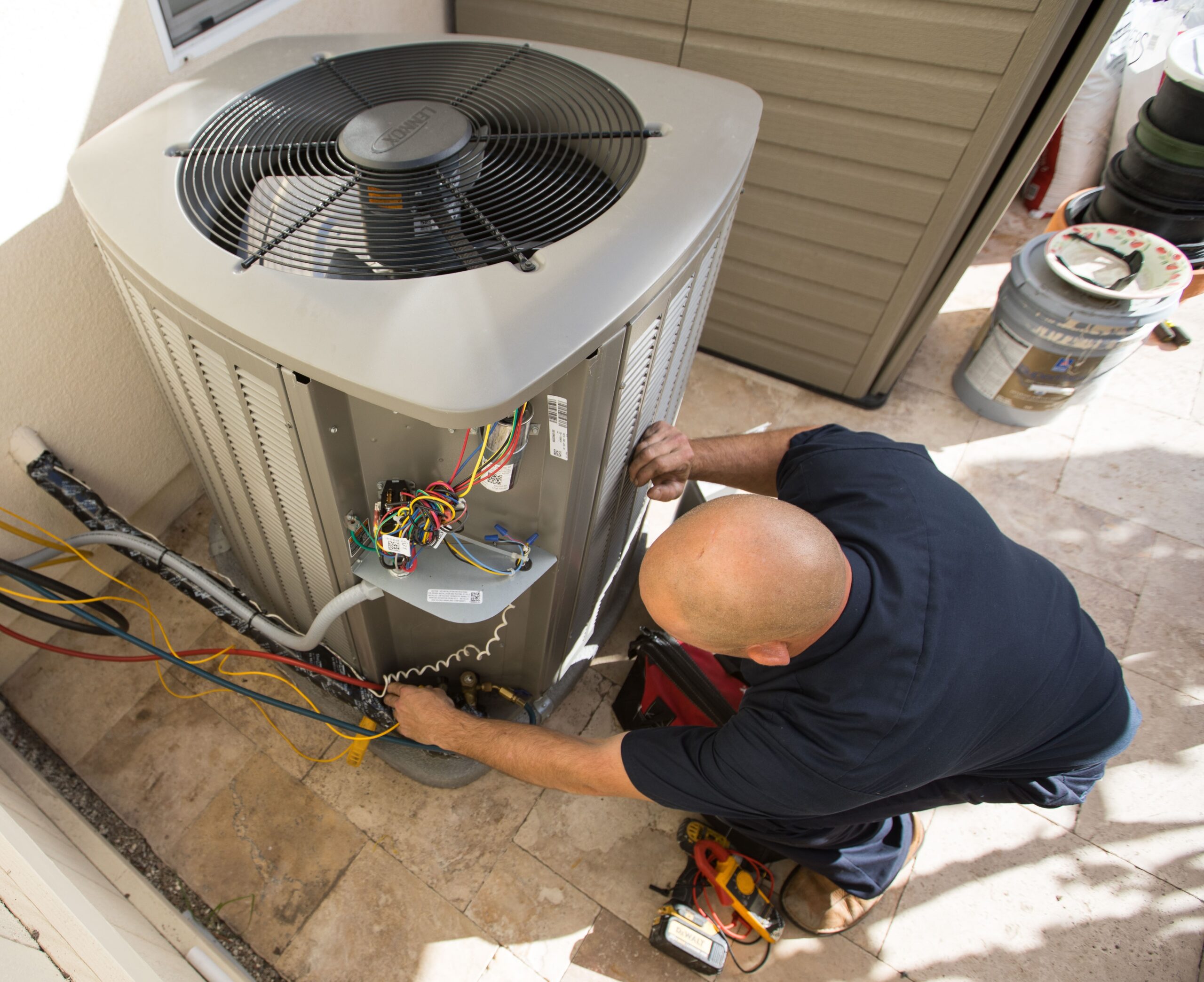
Homeowners are sometimes unexpectedly faced with a large expense arising from the failure of a home heating system, central air conditioning unit or another system we rely on for our basic comfort. We dread these scenarios not only because of the high cost of heating or air system repair, but because of the inconvenience of managing without air or heat when it’s most needed. Finding a reliable company to quickly fix the problem can be stressful, and our daily routine is interrupted for home heating repair.

So how to steer clear of the ultimate home heating repair emergency?

Follow these tips that require only minimal attention once or twice a year, and avoid costly heating and air emergencies, and even when you do need a heater replacement, you will be prepared. In three words, Maintenance, Maintenance, Maintenance…

Heating System Inspection

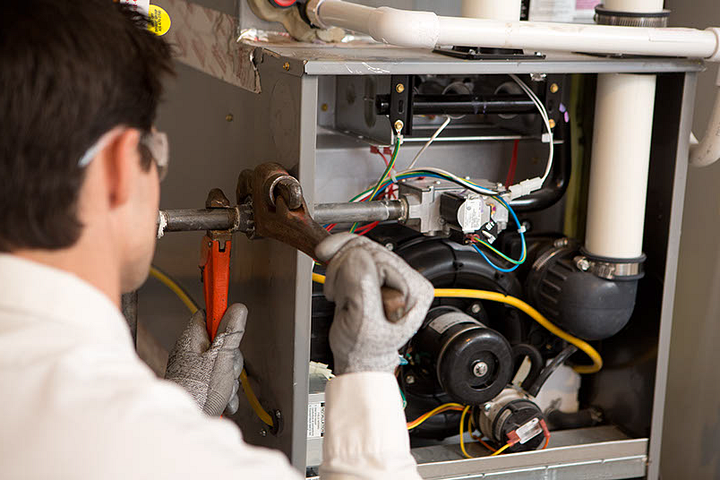
One annual inspection for your home heating system should be enough to ensure proper functioning and alert you of any potential problems. A qualified heating specialist can inspect and evaluate the heater, and clean the unit to get rid of dust and debris that accumulates in and around the unit and can potentially create problems.

Air Conditioner Inspection

Similarly, air conditioners ideally require routine maintenance once a year. Professional inspection, evaluation of the overall condition of the air conditioning unit and cleaning by an air conditioning maintenance specialist will add years to the lifespan of your A/C system.

When to Schedule Heating & Air Conditioner maintenance?

Heating service should be scheduled in early fall and home A/C service in early spring, for two simple reasons. First, timing routine maintenance when the heating or air system is not yet in heavy use for the cold or hot months makes obvious sense. If the system doesn’t turn on, or if there are any minor malfunctions or worn out parts, you will have a sufficient window to take action and fix any flaws. Second, most Heating and Air Conditioning companies are slow around this time, allowing you to find discounts and deals on maintenance inspections. What If It’s Too Late?

Money Saving Tips for Heating System Replacements

The benefits of early action are not only evident for the stress-free and convenient maintenance service you get, but will give you the chance save you money in the unfortunate case that your heating or air conditioning system needs to be replaced. Choosing the right furnace size to fit your household size and the structure of your home is important, and considering possible energy-saving solutions, such a heat pump for moderate climates ensure optimal efficiency for whatever your heating and cooling requirements may be. When problems are detected on time, you will have time to research for the right Heating & Air contractor to complete the job. Ask fellow homeowners for advice and references, and find discounted prices on heater and air conditioner installations and repair.

Q&A: All about Water Heaters

AnyTyme Service Manager answers water heater questions

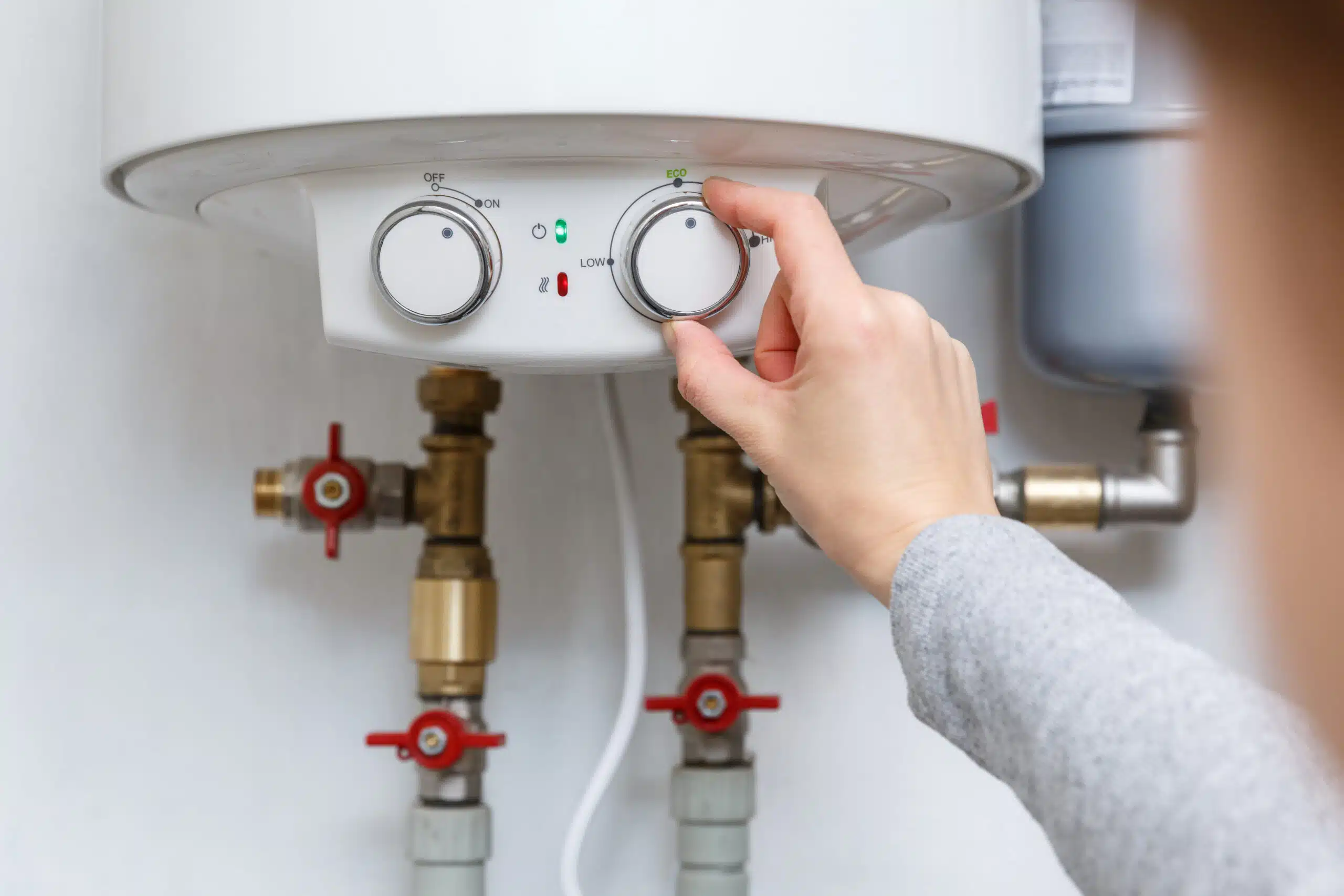
As the dreaded day comes when the hot water just isn’t flowing or worse, you come home and your house is flooded, there is very little an average homeowner can do to fix the problem. Most people are lucky if they know whether their water heater is gas or electric, let alone where to start when the unit breaks down. Javier Vidrio, the service manager at 1800AnyTyme answers the most pressing questions concerning water heater maintenance, repair and installation.

How long have you been a water heater technician?

Javier Vidrio, Service ManagerI’ve been working as an HVAC technician for over 10 years.

Why isn’t it a good idea to fix your own water heater?

Any job involving specialized technologies should be handled by a trained professional. This is especially the case when it comes to water heaters, since flooding and severe water damage can occur if the job is not done right. Furthermore, most water heater units have unique parts and design, so the repair or maintenance needs to be done up to code.

What is the most common problem with water heaters?

At 1800AnyTyme most of our calls are emergency calls. Homeowners often wait until the last minute to call in the pros when something goes wrong and the water heater fails. From my perspective, many water heater emergencies could be avoided if homeowners would follow a maintenance schedule to increase the useful life of their water heaters. Serious water damage and flooding caused by a failed water heater could therefore be avoided.

Can you recommend a maintenance routine that can help prevent water heater failures?

The average lifespan of a water heater is 5-7 years, but a few annual maintenance check-ups can allow your water heater to last for up to 10 years. First, all water heaters should be drained once a year. This ensures that any build-up of calcium or other materials are flushed out. Another water heater maintenance routine is to have a professional HVAC technician come in and inspect all flex lines and gas lines, and more importantly, detect any leaks that may have developed.

Are there some warning signs that might indicate a potential water heater problem?

If you ever notice water around your water heater, there may be a leak that calls for the immediate attention of a water heater technician. Calling in a tech to do a leak detection will save you money in the long run; having your house flood due to a failed water heater will cost you a pretty penny, while a simple check-up will cost you just a fraction of that.

Also, if you find that you keep running out of hot water quickly, there are probably large quantities of calcium build-up in the water heater tank. Flushing the water heater tank will get rid of any material that has accumulated on the bottom of the tank, and the chances of a leak or other serious problems can be reduced.

How long does it take on average to install a new water heater?

Water heater installations usually take around 2-3 hours to complete, depending on the model and type of the water heater in question.

What type of water heater do you recommend for an average household?

We carry all types and brands of water heaters, and can help you to select the right one to fit your household’s needs. We generally suggest that homeowners consider installing a tankless water heater system, since it will save you money on your energy bill each month. The tank size of a traditional water heater depends mainly on how many people live in the household.

What should everyone know about their water heater?

  1. Turn off the cold water inset valve
  2. Turn off the gas supply valve if you have a gas-powered water heater
  3. Disconnect the electrical supply if dealing with an electric water heater
  4. Attach a hose to drain valve and drain tank

Water heater leaks and failures are extremely time sensitive, since there is an imminent danger of water damage to your home in the case that a water heater breaks down.

We have designed a scheduling system that guarantees that all emergencies are handled within 60 minutes from the time you call us, minimizing the damage and cost associated with broken water heaters. Schedule a water heater maintenance or installation online, or call us at 1-800-724-8232 to consult with a water heater technician.

What Makes a Great Plumber?

What makes a great plumber?With an overwhelming number of companies offering similar plumbing services, it can be tricky to choose the right plumber. Ideally, you not only want to find a skilled professional who is reliable and honest, but also someone who you can trust to discreetly work around your home and to be available if you ever run into plumbing emergencies. Expertise in a variety of plumbing problems is the first obvious quality to look for, but just like with any other service, you want a respectful, friendly and helpful individual to guide you through the process and deliver the most cost-efficient and quick solution.

Here is a list of what to look for in a plumber:

  1. Clear communication: you deserve to know what and why there is a problem and exactly what needs to be done, which parts are needed and how long it will take. After all, you are the one paying for the service, and you have the right to know where your buck is going.
  2. Cleanliness: a professional plumber should always wear protective shoe covers to ensure your carpets and flooring stay clean, and a thorough cleanup after the work is complete should be a given.
  3. Professional uniform: While looks are by no means everything, a clean attire with clearly visible company logos assure you that you are dealing with a plumber from a reputable company.
  4. Guarantee of timeliness: No one likes waiting around for a service technician for hours on end, and it is therefore vital that you are given a convenient appointment window for your service, and that the plumber adheres to that schedule. Some companies even offer compensation if your plumber is not on time for the appointment.
  5. Upfront pricing: never allow a plumber to begin work before you are given a clear, upfront quote on the cost of the project and parts needed. If you are not comfortable with the price quoted, or if you are not given an accurate description of what the price includes, consider contacting another plumber.

Any plumbing company that gives you a good experience with your plumber and leaves you impressed with his performance is worth sticking with for future situations.

Select the Best Fitting Furnace for Your Home

Best Fitting Furnace for your House

Choosing the perfect sized furnace heater for your home is an important investment. Your qualified central air conditioning contractor should help you make your choice of the correct furnace size. You don’t want one that is too small because it will be constantly flowing to maintain warmth. A furnace that is too big will cycle on and off frequently, which wears down its components faster, unnecessarily wastes energy, and costs more in the end.

The following factors help determine the optimal furnace size:

· House design
· Size
· Construction
·Climate

Calculate the Right Furnace Size

Proper furnace size should be based on energy-loss calculations. The heating capacity of a furnace is measured in thousands of BTU (British Thermal Units). Your contractor will come up with the exact BTU equations by multiplying the input BTU by the efficiency percentage. For example a 100,000 BTU furnace at 80% efficiency will produce 80,000 BTU, but if that same furnace is only at 95% efficiency it will produce 95,000 BTU of heat output.

Evolution of Furnace Types

Furnaces have evolved quite a bit in the last decade. The most modern furnaces burn less fuel than the ones from the past. Some have heat pumps that wring heat from the bottom of the floor to the ceiling and vice versa in the summer when acting like an air conditioner. These types of furnaces are most common in the Southern states, while oil furnaces are typically found in older homes in the Northeast. The most common type of heater is the modern central-heating system gas furnace.

Whole House Surge Protectors

Our lives have become utterly dependent on electrical appliances in the house. Computers, TVs, stereos, microwaves, DVD players and the like are in constant use, but as long as they’re operating right, we tend to neglect protecting them from the invisible threat of power surges.

A power surge decreases the lifespan of appliances

Lightning and power surgesA power surge or power spike occurs when there is a substantial increase in voltage in the flow of electricity, the usual voltage in homes and offices in the U.S. being 120 volts. A power surge can originate outside your home, most commonly when lightning strikes an electrical power line, sending a massive jolt of electricity down the power line and destroying electrical components inside appliances. Most of us are aware of the threat of lightning strikes to home electronics, and we sometimes take pre-emptive measures against them, like unplugging appliances when we leave the home for long periods of time.

However, there is another type of power surge that we are often unaware of: the daily power surge coming from turning electrical systems on and off, a smaller scale but equally threatening type that gradually wears down electrical components inside the equipment. Surge suppressors are ideal for protecting your home from both the power surge caused by lightning and the power surge that is continuously hitting your appliances and decreasing their useful lives.

Surge protector: indispensable protection for your home

Whole house surge protectorThe most common types of surge protection, although we’re often unaware of them, are point-of-use surge protectors, like grounded electrical outlets and power strips with built-in surge protection. Older buildings rarely have grounded electrical outlets, and the problem with power strips is that while we assume they come with built-in surge protection, this is usually not the case. Furthermore, point-of-use surge protectors rarely provide enough protection against powerful surges in power, like when a lightning strikes. The undoubtedly best surge protector is therefore a whole house surge protector, installed in the main electrical panel or electrical meter of your home, and it simultaneously provides surge protection for the entire house and all electrical equipment within.

Why go for a whole house surge protector?

Installing a comprehensive surge protection system like a whole house surge protector obviously requires an initial investment, but if your LCD TV or brand new computer breaks down because of a power surge, or in the worst case, if an appliance bursts into flames threatening all your possessions, the material damages are extremely high. A whole house surge protector is in essence an insurance for all your appliances at once, and is more reliable than simple point-of-use surge suppressors. As with all electrical work, a qualified electrician is required to install a whole house surge protector. Online local listings are a great resource for finding reliable electricians in your area. Once the surge protector is in place, you can have a good night’s sleep knowing your valuable electronics are safe.

Leaky Faucet Help

The incessant dripping sound of a kitchen faucet is enough to drive anyone nuts. The dreaded leaky faucet is one of the most common plumbing problems homeowners have to deal with, and while generally it is simple to fix it, we often put off this task and put in ear plugs instead. It is important to repair a leaky faucet to not only maintain your peace of mind, but also to conserve precious water resources, and in the process save money on your water bill. The range of possible causes of a leak is long, and the degree of difficulty of fixing the leak varies depending on which type of faucet you have. This guide is designed to help narrow down the possible sources causing your faucet to leak and to guide you through the repair process.

Leaky Faucet Repair: Identify Your Faucet Type

Leaky faucetThe two most typical faucet types are the “compression” faucet and the “washerless” faucet. A faucet with two knobs is usually a compression faucet, which is an older faucet design, but still found in many homes. There are several types of washerless faucets, including ball faucets, disk faucets and cartridge faucets.

Ball faucets have just one rotating knob that regulates the hot and cold water flow. Consider yourself lucky if you have a disk faucet; they are extremely reliable, but they do leak, it is probably due to worn-out seals. A disk faucet can have one or two knobs, whereas a cartridge faucet usually comes with just one handle. Each faucet type has a unique method of functioning, and the faucet repair may be simple or complicated based on the intricacy of the faucet’s construction.

Leaky Faucet Repair: Find the Cause of the Leak

A number of parts inside a faucet can fail and cause it to leak. Finding the part causing the problem requires some assembly work, and may be best left for a professional to handle. If you choose to tackle the leak yourself, there are some guidelines that make it easier to find the broken faucet part, and ultimately to fix the leak.

A compression faucet is generally the easiest to fix because the leak is most likely cause by one of the washers in the knobs failing. To repair the leak, the washer simply needs to be replaced.

A washerless faucet leak is a bit more complex, since the construction is somewhat more sophisticated and the variety of parts that may break is greater than in simple compression faucets. On the other hand, washerless faucets are much more reliable than compression faucets, and a faucet leak is thus less likely to occur. A leaky faucet with a cartridge assembly is usually caused by worn out o-rings in the faucet construction. Similarly, a leak in a disk faucet with two handles is most likely due to the o-rings or stems. A single-handle disk faucet, on the other hand, needs a faucet repair when the seals fail. A leak in a ball faucet is can be caused by a loose adjusting ring, a failed cam washer, or worn valve seats or springs.

Leaky Faucet Repair: Do it Yourself or Call a Plumber

Once you have identified the type of faucet that is leaking and narrowed down the most probable root cause, it is time to roll up your sleeves and dig into the tool box, or simply pick up the phone and call in a plumber to save the day. While a professional faucet leak repairs technician will cost you some money, after the leak repair water usage will be reduced bringing in savings, and more importantly, hiring a trained plumbing technician ensures that the right repair solution is found and the likelihood that the faucet leak will reoccur is minimized. To find a reliable and efficient leaky faucet repair company in your area, make sure you check local listings online and read what customers have to say on online review sites.

Essential Guide to Tankless Water Heaters

What Is a Tankless Water Heater?

Tankless water heaters, also called demand or instantaneous water heaters, heat water as needed without storing it in a traditional, bulky hot water tank. In an old-fashioned water heating system, hot water is stored in a tank, and a large quantity of water is constantly being heated to supply hot water to all faucets and appliances in the home. A tankless water heater on the other hand heats the water whenever a faucet or shower is turned on, eliminating the need for hot water tanks that waste energy by heating the water even when no one is using it. Having “on tap” hot water eliminates system operation in little or non-use periods such as night time or when you’re at work. Installing a tankless water heater will bring in energy savings and a tax credit of up to $1,500 is available to home owners who increase their home’s efficiency with one of these systems.

How Do Tankless Water Heaters Work?

How tankless water heaters workThe technology behind tankless water heaters is not all that complex. Homeowners who are used to the idea of traditional water heaters might initially question whether a tankless system can supply enough hot water at the right temperature when needed, but in fact a tankless system creates an endless supply of hot water. A tankless water heater is installed either at the point of use, for instance underneath the sink, or like a traditional water heater anywhere in the house. A built-in computer inside the tankless water heater unit detects when a hot water tap is turned on and burners inside the unit instantly turn on, heating the water as it flows through the tankless water heater, supplying the home with virtually endless supply of hot water. When the faucet is turned off, the burners inside the tankless water heater automatically turn off and the system sets itself to a stand-by mode.

Why Switch to a Tankless Water Heater?

There are several benefits to replacing your old hot water tank with an energy-efficient tankless water heater:

  1. Save money and protect the environment

    Tankless water heaterBecause there is no need to constantly heat water stored in a large tank, tankless water heaters save money on your energy bill. A large chunk of a home owner’s energy bill is comprised of the cost of heating water, up to 30% of the entire energy usage of a household. This cost can be significantly reduced by replacing a hot water tank with a tankless water heating system. In addition to monetary savings, just by switching to a modern tankless water heating system you are reducing your daily energy consumption and benefiting the environment by reducing your carbon footprint. The government also provides a tax credit of up to $1,500 for switching to a tankless water heater, details for which can be found below.

  2. Endless hot water supply

    Tankless water heaters come in all sizes to fit your unique water heating requirements that depend on household size and the number of appliances that use hot water, for instance a dishwasher and washer. When you choose a tankless water heater system optimized for your hot water needs, you will not run out of hot water because it is heated on demand, instead of being supplied from a storage tank that can run out of hot water when it is most needed.

  3. Save much needed space

    By definition, tankless water heaters do not have a storage tank, and the units are much smaller in size and can fit underneath the sink or in a closet.

$1,500 Tax Credit for Installing a Tankless Water Heater

The American Recovery and Reinvestment Act of 2009, signed last February by President Obama, significantly increased the amount of tax credits available to consumers who switch from high energy consumption systems to energy efficient systems, such as gas tankless water heaters. The tax incentive covers 30% of the cost of the tankless water heating system, including installation costs, for a maximum amount of $1,500. Most gas, oil and propane powered tankless water heaters installed by the end of 2010 qualify for the tax credit, giving you a great reason for going tankless now.

Getting Started on Tankless Water Heater Installation

The first step when going tankless is to find out which model perfectly fits your needs and research reliable companies for professional installation service. Replacing your old water heater may seem like a formidable task, but experienced professionals with the expertise and top notch tools handle tankless water heater installations and clean-up efficiently without a hassle.

Cranking Up the Heat: Prepare Your Heating System for the Winter Months

We are often taken by surprise by how fast the temperature drops after the summer is over, and when it’s time to pay a visit to the basement and check on the old furnace, you may find that you need a heating system repair. Fortunately, for most simple problems there are easy do-it-yourself steps you can take to make sure your home heating system is running and you are nice and cozy during the pumpkin season and beyond.

1. SIMPLE FURNACE TUNE-UP FOR PROPER HEATING SYSTEM OPERATION

We don’t need to know all the intricacies behind our home HVAC systems, but we do want them operating smoothly. The following check list is a good starting point for ensuring that your furnace is safe to turn on, and will not require extensive technical home heater repair knowledge. Some of us may need more detailed directions on performing a thorough furnace tune-up for heating systems, but this is a good place to start:

  • Make sure the thermostat controlling your heating system is functioning properly
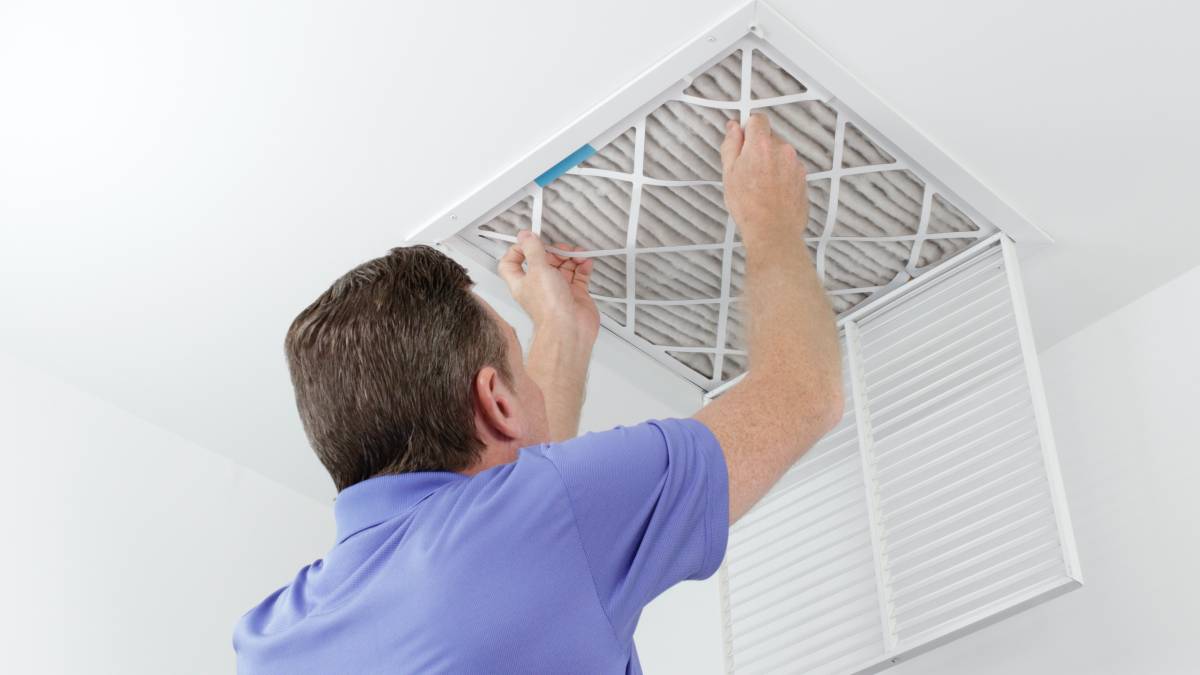
  • Locate the filter in your furnace and make sure it’s clean. If it appears clogged or dirty, change the filter.
  • Go through electrical components in the furnace and make sure they are operational
  • If needed, oil the motors inside your furnace. (play it safe! Make sure to consult an expert if you are not comfortable performing these tasks.)
  • Find the heat exchanger in the furnace and search closely for cracks to ensure no carbon monoxide will leak through.
  • Make sure air flow is not diminished (if it is, the evaporator coil may need to be cleaned)

2. COMMON SENSE TIPS TO KEEP THE HEAT COMING

Minimize fire hazards: The possible dangers with operating a furnace include fires and unwanted emission of carbon monoxide into your home. While it is not likely that a properly functioning heating system will be the source of a fire, we sometimes forget simple common sense steps that can be taken to minimize safety risks. Furnaces are usually located where we store things, including equipment like lawn mowers that have gas inside, even gas canisters, so remove any items that may pose an explosion or fire hazard from contact with the furnace.

Be wise about time: It is just human nature to leave things for the last minute – we all do it now and again (at least with taxes). To avoid freezing your toes when the first really cool morning comes along, complete the above steps when it’s still sunny out and the trees have leaves to avoid extensive heating system repairs. That way, if you do find out that there is a problem with your furnace that you can’t solve yourself, you will have time to research reliable, professional home heating repairs technicians in your area to fix your heating system.

3. WHEN IT’S TIME TO CALL A HEATING SYSTEMS REPAIR PROFESSIONAL

Furnace Repair If you are experiencing problems with your furnace, or if you are too busy to perform the annual tune-up, it may be necessary to call in a home heating professional. If you don’t know a reputable heating system repairs company, you want to do some research to be sure of the following: the company is reliable, guarantees timely service of home heating repairs to work around your busy schedule, has certified trained heating repairs technicians and has positive customer reviews on online review sites concerning heating repairs services they have performed. If a company has lots of positive reviews, it is a good indication that you are dealing with an established and trusted home heating repair service company.

Four Steps to Reduce Air Conditioning Costs

Simple steps for cutting AC costs down to size

No doubt about it, electric bills rise during air conditioning season, especially if your home has central AC… and you’re fighting back!

Knowing that AC is the most expensive part of your electric bill and a major cause of greenhouse gas emissions, you’ve set the thermostat to as high a temperature as is comfortable, right? And, you’ve maintained your air conditioning system by changing filters, sealing air leaks in ducts and taking other efficiency-boosting measures, yes?

Good work. You’ve taken crucial steps to lowering your electric bills. Now it’s time to fight on, and look for other, commonsense and inexpensive ways to not only save your money, but also help the planet by reducing the environmental impact of electricity generation.

Fans – cheaper to run and very cooling

We’ve all heard the TV weather people talk about “wind chill.” Moving air simply makes actual air temperatures feel cooler to your body. Harness this effect indoors with fans. Fans draw less electricity than AC and can be used exactly where needed on a room-by-room basis. Ceiling and standalone fans are both great for getting the air flowing, allowing you to bump up the AC thermostat setting.

Take advantage of cool night temperatures

Open the windows at night or late afternoon to allow cooler air temperatures in, then close them in the early morning to retain the cool air. By adopting this natural cooling technique, your AC will have to run less.

Deflect the greenhouse effect

Sunlight entering through windows creates heat! The California Energy Commission says that this solar gain is responsible for up to 30% of a home’s cooling needs. There are simple ways to block sunlight and reduce heat build up.

Use window drapes. They block sun and insulate to retain cool air. Darker living space is the only downside. However, light-colored drapes help brighten things up. Note that drapes are more effective than blinds.

Use reflective film. Available at hardware and home improvement stores, this tinting film adheres to window glass and reflects about 40 to 60% of sun-generated heat while allowing light in. A tinted window will also stop about 99% of UV rays that can fade furniture. The cost? About $2 per square foot for do-it-yourselfers – which could prove a wise investment if electricity costs continue to rise..

If your windows have ordinary screens, you can replace them with solar screens. They are made of a special mesh that reflect up to 70% of heat-producing rays and are available at hardware/home improvement stores.

It’s a major expense, but if it’s time to replace your windows, make sure they’re today’s “low-E” models. You can specify glass with just the amount of solar blocking (or gain) that works for your climate.

Plant trees, especially on the south-facing side your home. Deciduous trees (their leaves drop in the fall) provide cooling shade in the summer while allowing in sunlight in the winter – when solar gain can be a good thing!

Properly managing windows, drapes and shades throughout the day can make as much difference as more expensive things such as additional insulation.

Insulate and cool your attic

Did you know that un-insulated attics allow the hot air that builds up there (easily reaching over 100 degrees in summer months!) to transfer into your home through ceilings? This makes the AC work harder. Add insulation (loose-fill cellulose and fiberglass are popular choices) to stop the heat transfer.

If you don’t have an attic fan, you should consider one. With gable vents, retrofitting a fan at the vent is easy. By blowing hot air out the vent, you reduce heat transfer into your home and create less work for your AC. You could even power the fan with a solar panel mounted on the roof or exterior wall with minimal installation and… no charge for electricity!

Stop air leaks

Don’t cool the great outdoors. By sealing doors and windows with weather stripping you ensure that you’re only cooling indoor air. Holding a lit match next to window and door edges is a good way to test for air infiltration.

Paint — a simple solution

Are you going to paint your house? Use a light color to reflect rather than absorb heat. You could cut cooling costs by about 20%.

Techniques for cooking and lighting

When cooking with the stove or oven, turn on the vent hood to remove hot air. Whenever possible, use the microwave! Microwave ovens don’t generate much heat. Bonus — they’re cheaper to operate than gas or electric ovens.

Outfit your entire home with cool-running compact fluorescent bulbs. Not only are they just as bright and use considerably less electricity than conventional incandescent bulbs, they generate about 90% less heat. Because the less heat that is generated, the less need there is to cool the air.

Saving here and there adds up

By applying as many of the measures in this article as possible you help optimize your home’s ability to stay cooler and reduce the load on your air conditioner – a commonsense solution for lowering electric bills and environmental impacts.

Electric Costs and Need for Maintenance

It’s cool to save money on your electric bills.

When you turn on the air conditioner, you can almost feel the surge as your electric meter starts to spin faster – as well as feel your body temperature rise when you imagine next month’s bill.

Across the southern USA, AC is at or near the top of the list for home electricity consumption. Rather than spending money on electric bills, most rational people would rather reduce energy consumption and apply the savings to the OTHER list that might include things like a vacation, college, retirement savings, a new car…

Adding up the bills

The electric company charge by the kilowatt (or kill-a-wallet as some might say). So the more kilowatts used, the higher the bill.

Consider that a typical central AC system uses about 3.5 kilowatts of electricity per hour and a medium window unit uses about .9 kilowatts per hour.

According to the government’s Energy Star program, homeowners in Arizona pay about $212 to run a standard room air conditioner for about 1,000 hours over the summer period. Those cooling their entire home with central AC pay roughly $484. Southern California residents could expect similar bills – and some would consider such bills conservative.

The energy-focused, non-profit Alliance to Save Energy looked at the big picture across the USA and projected average annual household heating and cooling costs to rise to about $1,200. Hotter portions of the country usually pay significantly more, particularly in AC costs.

According to Michael Bluejay, an expert on home electricity use, “air conditioning uses more electricity than anything else — 16% of total electricity used. In warmer regions AC can be 60-70% of your summer electric bill.”

So, the need to make equipment and home as efficient as possible is obvious to all who value their hard-earned cash. Saving even a modest 10% on a conservative $1,200 annual bill means $120 in your pocket instead of the utility company’s. If the annual bill is a not-unusual $3,000, you save $300.

Keeping your air conditioner and other electricity-consuming appliances (yes, clean that dust from your refrigerator’s coils) in peak operating condition will help keep bills as low as possible.

Cost of neglecting maintenance

Since AC can be such a major portion of your bill, you can’t afford to neglect regular tune ups. For each year of routine maintenance you skip, your air conditioner loses about 5% of its efficiency. So, even an efficient Energy Star-rated unit will soon become an energy glutton without attention.

There are other, social and environmental costs of poor maintenance that range from requiring power producers to generate more electricity (which often contributes to more green house gases and the need to build additional power stations) to creating more demand that invariably raises the cost of fuel, such as oil and natural gas, used to power many electricity generating plants.

Ideas for reducing AC costs

• Top of the list: Keep your air conditioner tuned up! A professional inspection is inexpensive and can quickly pay for itself. Regular maintenance that might include services such as balancing the refrigerant level, changing filters, straightening bent cooling fins and sealing air ducts promote efficient operation. Efficiency = savings. According to the government’s Energy Star program, returning an unmaintained AC system to peak efficiency could cut up to $20 off a monthly electricity bill.

• Keep your home naturally cooler with simple steps such as closing window shades to block direct sunlight, switching to cool-running fluorescent light bulbs and running heat-generating appliances (clothes dryer, oven, etc.) in the cooler morning and evening hours. And, seal your home against air leaks around windows and doors with weather stripping – cheap and effective.

• When no one is going to be home, turn up the thermostat. If you have a programmable thermostat, set it to kick in at cooler temps just before people return. If you don’t have one, get one, because you could save about $180 annually in cooling and heating costs.

• Use fans. They consume less juice than AC, create moving air that cools people, and enable you to set the AC a couple of degrees higher or so.

• If your air conditioner is old, consider replacing it with one of today’s efficient models.

Your bottom line is the bottom line

You have better things to spend your money on than electric bills. Making sure your air conditioner and other appliances are running at peak efficiency is simply part of a smart lifestyle.

How to Repair a Lamp

Rewire a Lamp or Build a New One from Scratch

Since you have mastered the underwriters’ knot you might as well use that skill to fix that lamp in the den that flickers every time your football hero son stomps through the room.

If the lamp is plugged into a good plug – one that grips the prongs tightly, the problem is either with the cord or the lamp socket and/or switch. If the cord is intact and flexing it does not bring on the flickers then you probably need a new light socket.

Replacements are available at hardware stores and home centers for under $5. Make sure you get the correct type as they are available for both two-way and three-way lamps.

dissassembled_lightbulb

Pull the socket into its four component parts; the metal shell, aluminum socket, plastic base, and socket cap (see illustration.)

Unplug the lamp and remove the shade, bulb, and harp.

Pull the shell free from the socket cap and ease out the aluminum socket and plastic base. The cardboard sleeve is an insulator – leave it as is.

Disconnect the wires from the terminal screws on the base but do not allow the cord to slip down into the lamp base. Loosen the set screw and remove the socket cap from the lamp neck.

If you are reusing the existing cord, skip the next step, but if you are replacing the cord, secure the old one by tying a loose knot in the top end so it doesn’t slip down into the lamp.

Cut the plug off the cord and strip the insulation from the last half inch of the wires. Do the same for the wires on the non-plug end of the new cord.

Place the two sets of bare wires parallel and facing each other and twist them together tightly.

Using the old cord as a guide wire, pull the new cord through the lamp base and neck.

Once the new cord is through the top of the lamp you can remove and dispose of the old cord.

Pass the cord through the socket cap (small end down) and tie an underwriter’ knot as explained earlier in the instructions for replacing a plug.

Attach the bare wire ends to the two terminal screws located on the side and back of the plastic socket base.

Push the aluminum socket into the base and push the base and the knot into the socket cap.

Slip the shell over it the whole assembly, lining up the little bumps along the rim.

Pull the cord from the bottom of the lamp until it is tight and the socket cap is seated firmly over the lamp neck and tighten the set screw.

The same procedure can be used to turn any number of things into a lamp. If you can punch or drill a hole for the cord a vase, old pot, bottle, even a piece of driftwood can be wired and glowing in minutes.

Energy Star

Can’t Fix it? Use the Yellow Label to Replace it.

Sometimes something just can’t be fixed. If you want your hot water hot, the ice cubes frozen, or dinner cooked it may be necessary to buy a new hot water heater, refrigerator, or stove. New appliances are expensive, and buying one, particularly when you weren’t planning to, can be an unhappy chore. However, technology has increased so dramatically in the last few years you may find that you can quickly recoup part of the purchase price through reduced energy costs.

For example, new dishwashers and clothes washers use far less water than older models. According to Slate on-line magazine, the average dishwasher purchased in 2003 was 27 percent more energy efficient and used 30 percent less water than one manufactured 1993. “Today’s most advanced machines use just a single kilowatt hour of electricity per load, and as little as 3.18 gallons of water.”

The Department of Energy (DOE) says that today’s refrigerators are 40 percent more efficient than one manufactured as recently as 2001.

But the caveat is in the phrase “today’s most advanced machines.” There are still new products out there plugging along gobbling water and consuming energy at prodigious rates. As long as you have to make the investment in something new, get a product that pays you back.

That’s where Energy Star comes in.

Energy Star, established by the Environmental Protection Agency (EPA) in 1992 and now operated jointly with DOE, is responsible for the bright yellow labels affixed to new appliances, lights, electronics, office equipment; a total of 50 different product categories. The Energy Star label identifies a product as meeting Energy Star requirements and assists the consumer in making the best possible decisions about the energy efficiency before they buy.

The Energy Star label provides the following information:

• The energy consumed by that particular product each year as measured in kilowatt hours (kWh).

• Comparison numbers showing high and low levels of energy use by similar products.

• The savings in dollars that can be expected from using the labeled product over less efficient models.

Dollar savings are calculated using a national average of kWh rates. If you know the rate charged by your own power company (from your bill) you can make a more accurate calculation.

Even if you find a product with a label that indicates Energy Star qualification that label may not be up to date. As products change and improve Energy Star updates its criteria for rating them. One that met 2007 criteria but not 2009 may still be in the product stream but current product information by model and brand is available on the Energy Star website at www.energystar.gov.

New Knot, New Plug

Tie a New Knot, Replace an Old Plug

Directions for simple home repairs of the electrical variety such as replacing the plug on an cord or rewiring a lamp will usually specify using an “underwriters’ knot.”

This order is always tossed off by the writer as though we were all born knowing how to tie our shoes and had mastered the bowline by our fourth birthday. Come on! I know for a fact that even most Boy Scouts have no clue how to tie an underwriters’ knot – or even why they should.

But don’t be intimidated. An underwriters’ knot is just a simple way of connecting wires. So simple it probably doesn’t qualify for even a minor merit badge.

Here is how to tie an underwriters’ knot and replace a worn out lamp plug.

Use a sharp knife to cut off the old plug and any of the cord near the plug that appears frayed or worn. Pull the prong assembly and the housing of the new plug apart and slip the housing over the cord, sliding it down a few inches to allow room to work.

The cord is actually two parallel sets of wires running through a rubber conduit with a channel in the middle. With a sharp knife cut down the channel, separating the two halves for two inches or so. Strip the insulation off of the first ½ inch of each wire set and twist the ends into a point like a shoelace tip.

Bend the left wire to the left into a loop, passing the end behind the body of the cord. Make a loop to the right with the other wire, passing the end in front of the body of the cord. Pass the end of each wire through the opposite loop and pull tight. Ta-da; an underwriters’ knot.

Bend the end of each wire into a hook and place it over one of the screws on the side of the plug prongs; tighten the screws. Pull the housing up over your new knot covering it completely. Push the pronged end into the top of the housing until it is firmly seated.

New knot, new plug; maybe two merit badges are in order.

Replacing Electrical Outlets

Banish the Two-Prong Outlet

I just kicked my three prong adapter habit; you know those little gadgets that allow a 21st Century three-prong appliance cord to be plugged into the two-prong outlets of a 20th Century house.


Replacing electrical outlets is such a simple job it is hard to understand why I procrastinated or invested in so many adapters.  In the process of updating the outlets I also eliminated potential hazards from some so worn that they no longer properly gripped the plug, one that had obviously short-circuited at some point, and one where part of the outlet was broken off from a collision with a Big Wheel or something. 


Pick a time when there is sufficient natural light to work so you can turn off all of the household power.  If you pull the power only for that one circuit use a line tester to make sure the outlet is really dead; wiring can be strange.  You will need a new receptacle, a Phillips head and a regular screwdriver and perhaps needle nosed pliers. 


Remove the switch plate.    Chances are good that there are two screws on each side of the old receptacle but, as in the illustration, three on one side of the new one.  Don’t panic. 


Copyright 1-800-AnyTyme | Entries (RSS) |
Online Marketing Services | SEO Packages by Ricky Deez

     
Home Search Feed